This is an intense cover of the song “Africa” by an a cappella jazz choir from Slovenia called Perpetuum Jazzile. I do enjoy their use of “jazz hands” and sparkle fingers in their performance. Check it out:
This is an intense cover of the song “Africa” by an a cappella jazz choir from Slovenia called Perpetuum Jazzile. I do enjoy their use of “jazz hands” and sparkle fingers in their performance. Check it out:

Over the past 8 years i’ve become friends with Marc Canter. I first met him while working at AOL as we needed new and fresh ideas there and boy did he have them. We asked him again to come and help us out at Ruckus and he delivered again.
Marc lives in the San Francisco area – or at least he did. Marc has announced that he’s leaving heading to Ohio. You heard that right – OHIO. Why? Because he has big ideas and sometimes the best place to do them is not in the Bay Area. He’s also planning on tapping into some US resources that haven’t been utilized – unemployed people. His plan involves the unemployed force, a non=profit, private equity, grants, and lots of new ideas. You can read about it more here
I wish him the best of luck and hope to drop into OH soon to hear more about it.

I reread this morning Clay Shirky’s great SXSW piece about the media business and i wanted to share some of his thoughts here. Let me go through the end of the article a bit. He starts:
Elizabeth Eisenstein’s magisterial treatment of Gutenberg’s invention, The Printing Press as an Agent of Change, opens with a recounting of her research into the early history of the printing press. She was able to find many descriptions of life in the early 1400s, the era before movable type. Literacy was limited, the Catholic Church was the pan-European political force, Mass was in Latin, and the average book was the Bible. She was also able to find endless descriptions of life in the late 1500s, after Gutenberg’s invention had started to spread. Literacy was on the rise, as were books written in contemporary languages, Copernicus had published his epochal work on astronomy, and Martin Luther’s use of the press to reform the Church was upending both religious and political stability.
I want to draw the obvious parallel to today’s revolution in publishing and in technology. I belive that just having email and IM has increased the literacy in America (maybe the world). Not 15 years ago no kids were daily expressing themselves in written words, now they do all the time. In 1996, i would frequently get emails in ALL CAPS and poorly written. Now it’s a must-have skill. But let’s continue with the speech….
What Eisenstein focused on, though, was how many historians ignored the transition from one era to the other. To describe the world before or after the spread of print was child’s play; those dates were safely distanced from upheaval. But what was happening in 1500? The hard question Eisenstein’s book asks is “How did we get from the world before the printing press to the world after it? What was the revolution itself like?”
Chaotic, as it turns out. The Bible was translated into local languages; was this an educational boon or the work of the devil? Erotic novels appeared, prompting the same set of questions. Copies of Aristotle and Galen circulated widely, but direct encounter with the relevant texts revealed that the two sources clashed, tarnishing faith in the Ancients. As novelty spread, old institutions seemed exhausted while new ones seemed untrustworthy; as a result, people almost literally didn’t know what to think. If you can’t trust Aristotle, who can you trust?
I find this same thing is happening with columnist and journalism. Poor articles just get overlooked or debunked in comments. The threshhold for well researched facts is higher as the audience is double-checking you every step of the way. What happened with Aristotle is happenign today with every sports, politcal, and news writer in the world.
During the wrenching transition to print, experiments were only revealed in retrospect to be turning points. Aldus Manutius, the Venetian printer and publisher, invented the smaller octavo volume along with italic type. What seemed like a minor change — take a book and shrink it — was in retrospect a key innovation in the democratization of the printed word. As books became cheaper, more portable, and therefore more desirable, they expanded the market for all publishers, heightening the value of literacy still further.
Sound familiar to anyone? Can you say BLOG or TWITTER – such a simple concept. Take publishing an article on a web page and shrink it to a blog or 140 characters. What seems like a minor change has some profound responses.
That is what real revolutions are like. The old stuff gets broken faster than the new stuff is put in its place. The importance of any given experiment isn’t apparent at the moment it appears; big changes stall, small changes spread. Even the revolutionaries can’t predict what will happen.
Old stuff is indeed getting broken. Newspapers are gone or going fast. Magazines are next. Paper is being replaced by netbooks, iPhones and Kindles. These devices are embracing different technologies and shorter-form content. This is the real revolution that’s happening in front our face. That Time Magazine you have in your mailbox will be a story you tell your grandkids about, “hey kids, get this, i used to walk to the mailbox and pick up a ‘magazine’ that had stories in it written down, printed once a week and sent to me.” and they will look at you the same way i look at my grandparents when they talk about a world with radio programs only and no TV. Our new world has more content, better content, that is more easily shared and discussed – and it’s a beautiful thing.
![Reblog this post [with Zemanta]](http://img.zemanta.com/reblog_c.png?x-id=dfa570cc-7e2a-44e4-9b0b-5d46f00bd912)
As everyone knows, Michael Jackson died last Friday from heart complications in LA. While i wasn’t shocked by his death, I was amazed by the reaction both by people and the media. Some of my thoughts:

This could possibly be the most delicious keyboard ever constructed. As the Murdock family can vouch for, i’m a sucker for S’mores. It’s probably a good thing this isn’t in my office or else i’d be getting fatter and way less productive as keys start disappearing. Probably would last about 25 minutes. I’d also probably rest it on my Macbook laptop so the chocolate would melt a little bit. Yum

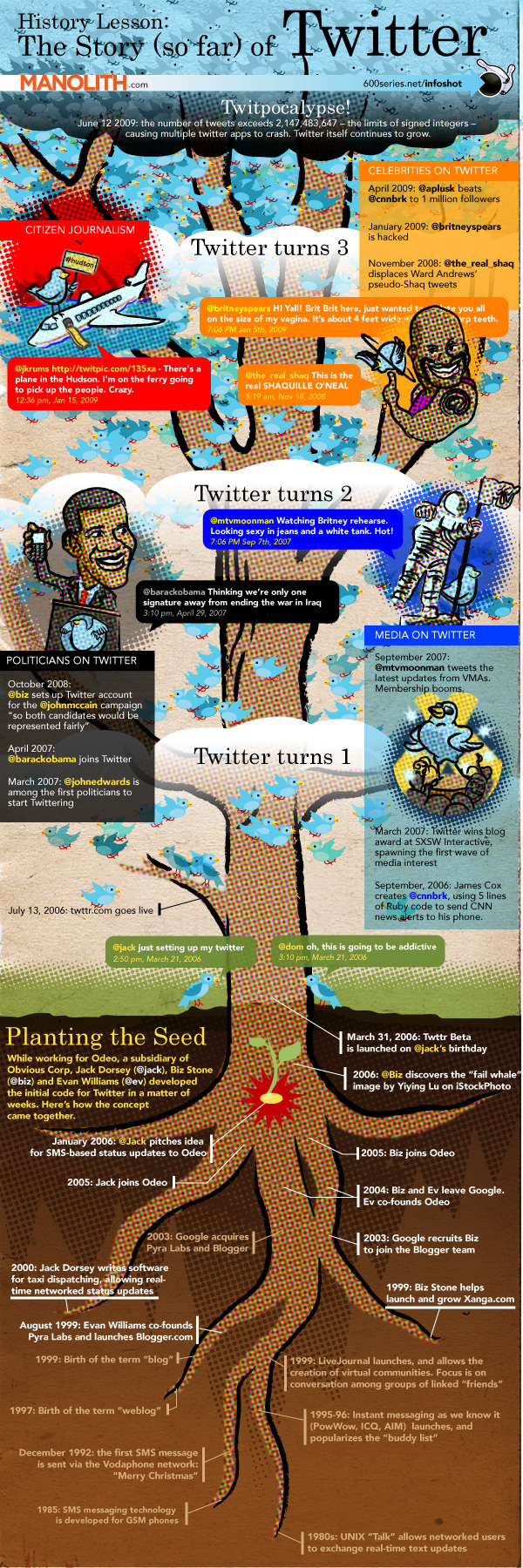
There’s an article i read today (thanks to Lizard) about how Twitter can you a better and happier person. The reasons listed in the article are:
I find all of these true. Sometimes i want to post a tweet about my life and i have to reflect about what i’m really doing and how it’s interesting to others. It often makes me adjust what i’m actually doing – and if i don’t do that then it makes me realize how i’m actually living my life. In that respect, it’s quite helpful.
![Reblog this post [with Zemanta]](http://img.zemanta.com/reblog_c.png?x-id=49de752f-8537-4db4-8407-910ccfb267e8)

There’s a good article in the USA Today about John Grisham. It’s the 20th anniversary of Time To Kill, his first novel about a young 10-year old woman who got raped, her father who took revenge into his own hands, and the lawyer representing him. It was an autobiographical story for Grisham and a great book. However, writing a great book doesn’t necessarily mean it will fly off the shelves. The article states:
When Grisham finished A Time to Kill in January 1987, it was a stack of legal pads. When typed, the manuscript was 900 pages.
The first chapters went out to a couple dozen publishers and agents. The rejections stacked up.
That April 15, after Grisham returned from his accountant frustrated, broke and about to borrow money to pay his taxes, agent Jay Garon called wanting to represent him.
Wynwood Press, a small company in New York, bought the manuscript a year later and printed 5,000 copies of A Time to Kill — at a length about a third shorter than the original manuscript — in June 1989. Grisham ordered 1,000 himself. Wynwood didn’t have marketing muscle, so Grisham concocted his own book tour.
“I had this scheme where I would throw a party in my local library and the whole town would show up and I would sell a lot. I have pictures of kids climbing on stacks of A Time to Kill.” But when the party was over, he still owned most of the copies.
It’s an interesting story – especially since we think of him as being so successful.
Last night i watched this video of Ze Frank (below). He’s a kooky guy but totally entertaining. I do like that he takes common elements of the internet and uses them to better connect people and to create social happenings and actual events and items. Instead of people trying to create products and platforms, he’s actually trying to create content in innovative ways – which i find both interesting and refreshing. I think some of the things he posted in here were just awesome.

First, he found this song on the internet that a dad was singing for his daughter called “I’m going to whoop somebody’s ass”. He took the song asked his fans to sign along and interact. The fans did that and more. This song spawned countless numbers of remixes. A video was created. A video was story boarded by a member of the “audience”, then another member offered portrait sketches to anyone who would help fill in the video. The video was made. The remix appeared in a movie, in a car commercial and countless other places and suddenly the creator – a unsuspecting PhD-turned-preacher nammed Ray, now finds the trajectory of his life shifted, as he is inundated with countless versions of his song, in audio and even video format. Awesome. (below is a video remix of Ray’s song)
[youtube=http://www.youtube.com/watch?v=sbGtefy_Uqw]
Ze does a lot with songs. Another intance, he created a song for a woman who wrote in that she was scared of the dark and he made up a song for her. You can hear that song by clicking on the image below
 Another fun thing that he did was called “youngme / nowme” where people take picturs of themselves when they were young and recreate those pictures now. It’s hilarious to see what people have done. Some are simple, some are very involved. In both cases, they are fun to look at. He’s got a whole site with the submissions here 2gfdyuszhp


There are lots of examples of cool things Ze has done in his talk. These are just a few. I always enjoy his creativity and if you have some time, it’s worth checking out.

I’m just a little person,
One person in a sea
Of many little people
Who are not aware of me.I do my little job
And live my little life,
Eat my little meals,
Miss my little kid and wifeAnd somewhere, maybe someday,
Maybe somewhere far away,
I’ll find a second little person
who will look at me and say,“I know you
You’re the one I’ve waited for.
Let’s have some fun.”Life is precious every minute,
and more precious with you in it,
so let’s have some funWe’ll take a road trip way out west. You’re the one I like the best.
I’m glad I’ve found you,
Like being around you
You’re the one I like the best.Somewhere, maybe someday,
Maybe somewhere far away,
I’ll meet a second little person
And we’ll go out and play.
— Little Person, “Synecdoche, New York”
The lines bring me back to the movie “Synecdoche, New York” which is extremely provocative. I’m not sure i would call it entertaining but i definitely enjoyed it. I’m pretty sure i need to see it again. I do think Charlie Kaufman (the writer and director) is a genius. He’s written some incredible films – all about the mind and how we intereact with it. In fact, here’s how i categorize all his films:
I’m not sure which one is my favorite as they are all good in different ways. Which ones do you like?


![Reblog this post [with Zemanta]](http://img.zemanta.com/reblog_e.png?x-id=349cf87d-16d1-4e64-a5bc-73d759b3dfe6)