The Secret Behind Snapchat’s Popularity

I was chatting the other day about why Snapchat is so popular.  Most people think it’s because of sexting and the fact that the photos disappear, but i think it’s more than that.  I recently came across a speech by the Snapchat founder (Evan Spiegel) and thought it was pretty enlightening as to how he sees usage occur.

He talks about how people today don’t want to fully recreate their offline experience online. They want to be online but understand that their online profile isn’t the sum of them.  It’s a pretty different view.  A highlight of the speech:

Traditional social media required that we live experiences in the offline world, record those experiences, and then post them online to recreate the experience and talk about it. For example, I go on vacation, take a bunch of pictures, come back home, pick the good ones, post them online, and talk about them with my friends.

This traditional social media view of identity is actually quite radical: you are the sum of your published experience. Otherwise known as: pics or it didn’t happen.

Or in the case of Instagram: beautiful pics or it didn’t happen AND you’re not cool.

This notion of a profile made a lot of sense in the binary experience of online and offline. It was designed to recreate who I am online so that people could interact with me even if I wasn’t logged on at that particular moment.

Snapchat relies on Internet Everywhere to provide a totally different experience. Snapchat says that we are not the sum of everything we have said or done or experienced or published – we are the result. We are who we are today, right now.

He then also talks about how when you take the photo away, it’s more about the feeling and not the photo.  It’s subtle but powerful difference.  He says: 

Snapchat discards content to focus on the feeling that content brings to you, not the way that content looks. This is a conservative idea, the natural response to radical transparency that restores integrity and context to conversation.

Snapchat sets expectations around conversation that mirror the expectations we have when we’re talking in-person.

That’s what Snapchat is all about. Talking through content not around it. With friends, not strangers. Identity tied to now, today. Room for growth, emotional risk, expression, mistakes, room for YOU.

I like that concept.  And with that it’s clear why people, especially teenagers, would want a more forgiving medium. 

Note: blogged about Snapchat almost a year ago and the massive growth they are having: http://loo.me/2013/06/lets-talk-about-snapchat/
Foursquare Swarming and the death of the Mayorship

I’m a big FourSquare user and i have been since they launched. I think I was one of the original 10k users to sign up for the service. Looking at my profile, i can see that i’ve done over 5700 checkin and am the mayor of over 20 venues.  I’m all over it. 

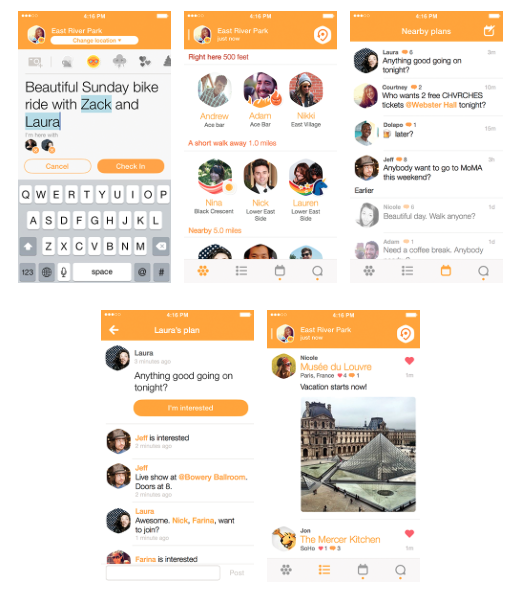
I learned a few weeks ago that 4S was going to change up their business.  They discovered that there are two distinct personas that use their app:  (1) the user who checks in a lot and views where their friends are; (2) the user who uses the app to find places to go and search for tips. They found that they were constantly limiting each personas experience so they could wedge both into the service. They also recognized the rise of “App Constellations” where multiple services such as Facebook, Dropbox and others are producing multiple apps that deep link to each other (read this good Fred Wilson blog post about it). So, they announced that they are splitting their business into two apps: one for the checkin user (like me) called Swarm and another for the venue researcher called Foursquare (which will compete directly with Yelp).

Swarm screenshots

I like this change.  Since it happened, i found myself using Swarm a lot and because it didn’t have the other stuff in there, it’s more streamlined and easier to use.  They also were able to add a few extra features like “Where are you going to be?” because they have the room.  In short, I love the new strategy and like the new app.  

Also, the mayor is being killed off. From the foursquare blog

Mayors 2.0. We wanted to get back to a fun way to compete with your friends instead of all 50,000,000 people who are on Foursquare. With these new mayorships, if you and a couple friends have been checking in to a place, the person who has been there the most lately gets a crown sticker. So you and your friends can compete for the mayorship of your favorite bar, without having to worry about the guy who is there every. single. day. Mayors 2.0 means that places can have many different mayors, one for each circle of friends, instead of just a single mayor at each place.

I am mayor at 20+ places and found daily enjoyment in that fact. This change is a bummer. I guess it reflects society’s need for everybody to be a winner, which is also stupid. But I understand why they’re doing it, but i also hate it.  It’d be nice to have a global mayor. 

As a side note: I’ve currently checked in to Illegal Pete’s for 79 consecutive weeks.  I feel like that’s some sort of record. 

Related Posts from Loo.me:

Product Stuff at Kapost

As Kapost grows, I really aspire for us to continually get better and better at what we do.  I ran the product group by myself for so long that i’m really excited to have more kickass folks on the team now (Anthony, Niraj, Eric, Jace).  With this extra firepower, we are able to do some really cool things and we’ve done some recently.  

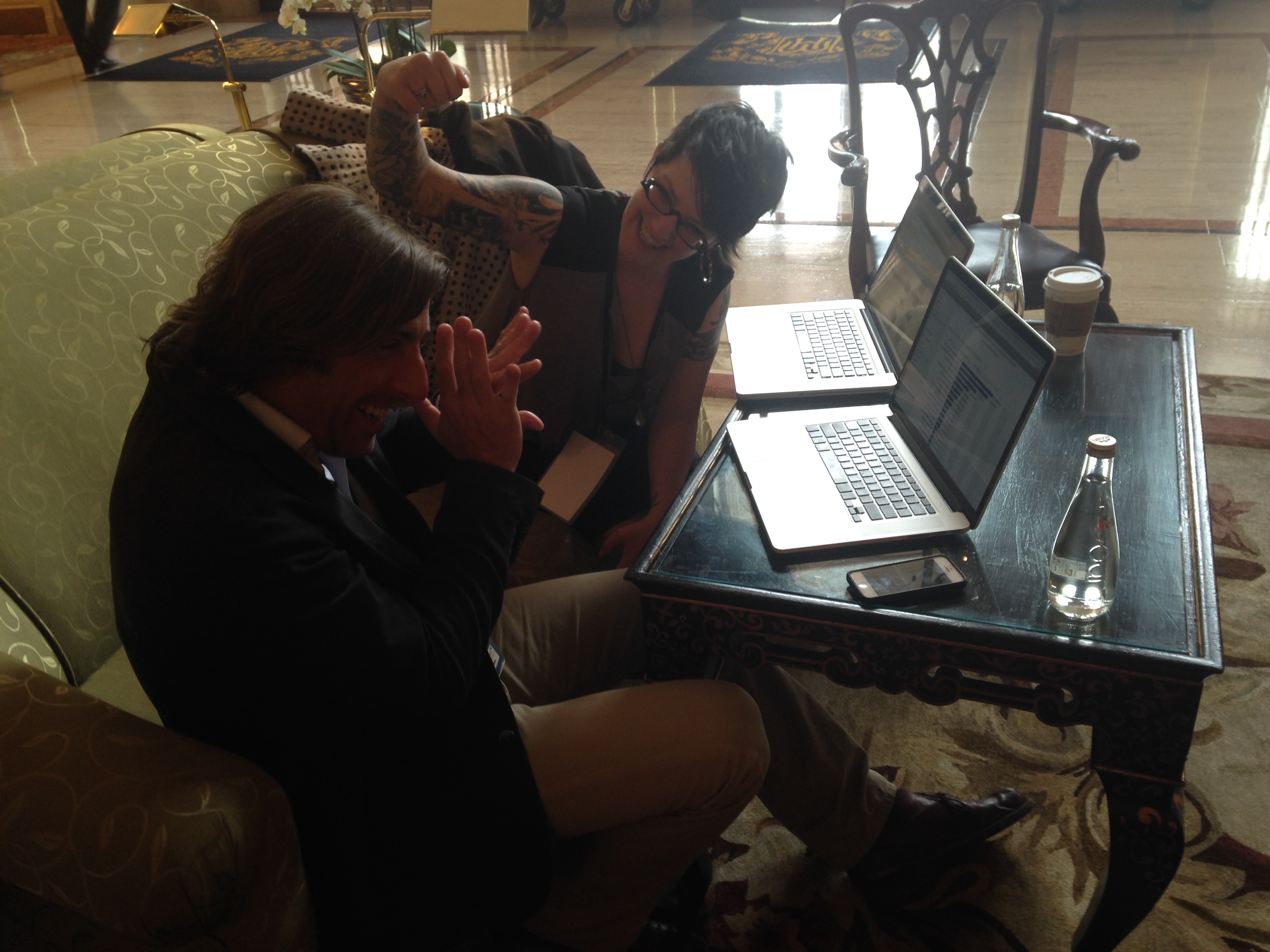
First, customer development.  We’re taking this to another level. We’re talking to customers more and more. We need to. As we get more customers, it’s harder to know if your roadmap is what they want.  Also, our product is getting more complex so the feedback has more breadth.  We’re off to a great start in 2014.  We had a Kapost conference in SF a few weeks ago and Anthony and I flew out there to talk to over 20 customers.  We talked about new features coming out and our upcoming redesign.  We got some great feedback. 

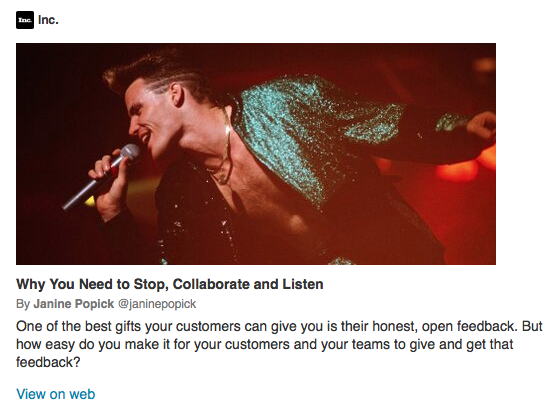
In fact, it worked out so well that we even had one of our customers write an article on Inc.com about how much she loved talking to us.  You know you’re doing something right when a customer starts thanking you for listening. 

Inc Mag article about Kapost

Second, we’re finally putting goals and metrics on product releases.  I’ve been thinking about this for a long time, but we’re actually doing it now.  Here’s the deal: when you’re planning a feature or new product, we (the PM’s) attach what success means for that product 8 weeks after release.  For one feature it means usage by 50% of customers 8 weeks after release.  For another, we had 10 customers asking for it, so we considered it a success if 7 of them using it regularly 8 weeks after release.  There’s lots of talk about customer development, prototyping, MVP, and agile methods, but much less about the followup that happens once a product is released. 

Our engineering team is evaluated by shipping code, but we’re evaluating our product team by whether or not they are hitting the success metric.   This has resulted in some interesting behavior in the product team such as: 

  • when a product is released they are much more inclined to explain it to the sales and customer success team so customers will know about the feature and use it
  • if a customer asked for a feature, they then make sure that the feature is adopted before moving on and if it’s not adopted, figure out why and fix it. 

After a product release, a feature should be adopted and hitting its goals.  If it’s not it’s either because the requirements were bad or the implementation is bad.  Either way, tracking the adoption is necessary.  This rigor is new to Kapost and already is paying dividends.  I have another post coming soon about why Mixpanel and Totango are great for tracking.

As Kapost grows (we’re now over 50 people), the teams get bigger and more sophisticated.  Lots of founders dread the growth because they no longer can have their hands on everything.  For me, i’m loving the growth of the company, the team, and our ability to do more. 


My Disappointment with Kickstarter

I’m a kickstarter junkie. I love buying new and cutting edge stuff, and i like supporting people building cool stuff.  I find items on Kickstarter that are often ahead of their time and i usually sign up to support them.

However, my last three big purchases from Kickstarter all turned out to be disappointments.  Not because of what i received but because of how and when they were delivered.  Let me explain…

Pebble Watch

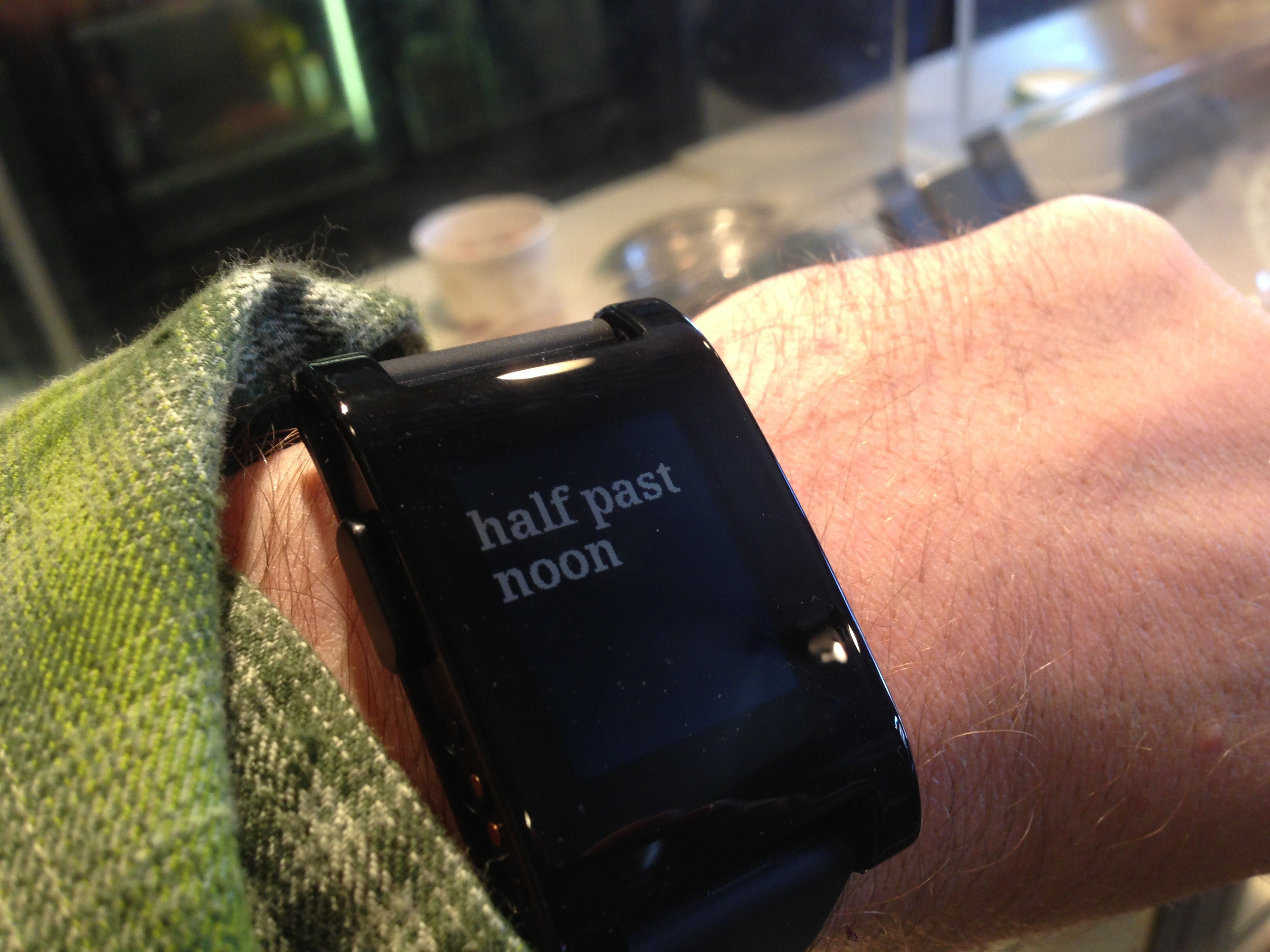
Why I was interested – a watch that integrates with my smartphone!  All updates come to the watch.  I also liked the Runkeeper integration where i don’t have to look at my phone when on a run.

Why I’m disappointed – I like the watch (my post about it) but i ordered it May 2012 and received it over a year later.  By the time it hit the market, there were better options available – such as the Samsung or Sony watch.  Ordering it on KS didn’t give me the option of exploring the market nor did it give me a watch before it hit the market.  It just locked me into a solution.

Narrative Clip / Memoto

Why I was Interested – I love recording my life.  The thought of something taking photos every 30 seconds sounds awesome. I was super into it.

Why I’m Disappointed – Again, it took FOREVER for this.  I order November 2012 and received it almost 15 months later.  Even worse they kept sending emails about how close they were – even though they weren’t actually close at all.

Veronica Mars Movie

Why I was Interested – I love the show. I was excited there’d be a movie and wanted to support that effort.  They’d give me a digital download that i could watch at home instead of going to the theater.  That alone was worth the price.

What I was Disappointed – The digital download was only available in this crappy Flixster player which couldn’t, unlike every other movie file i own, be played on my television.  Thus, i had to rent the movie anyway, essentially making me double-pay for the film.  Again i was disappointed.

To sum up, i love Kickstarter. I think it’s a great company.  However, my enthusiasm for backing projects has gone way down. I’ll probably do more but will only do it if i don’t need the product in any specific timeframe and only if my desire to support the project outweighs my desire to actually get the product described.


The craftsmanship between a great idea and great product

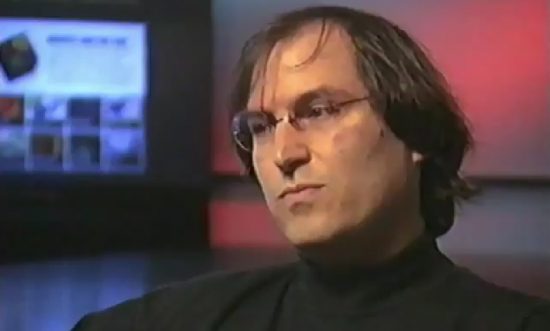
Saw this from Dixon’s blog over the weekend. It’s a good clip from Steve Jobs in 1995 where he talks about how building great products and thought it was worth a repost.

As the head of Product at Kapost, it really resonates to me as we often start off with a product idea and through months of discussion and design, come out at a different place – one that is always better than where we began.  I also like the talk of keeping things out of product.  In my opinion, that’s one of the hardest part of design product – trying to intentionally remove or not include parts that customers claim they want.  

The Jobs quote:


There’s just a tremendous amount of craftsmanship in between a great idea and a great product. And as you evolve that great idea, it changes and grows. It never comes out like it starts because you learn a lot more as you get into the subtleties of it. And you also find there are tremendous tradeoffs that you have to make. There are just certain things you can’t make electrons do. There are certain things you can’t make plastic do. Or glass do. Or factories do. Or robots do.

Designing a product is keeping five thousand things in your brain and fitting them all together in new and different ways to get what you want. And every day you discover something new that is a new problem or a new opportunity to fit these things together a little differently.

That’s one thing I love about product.  You need to understand design, your business, competitive landscape, your customers, technology and how to get things done.  It’s one of the more interdisciplinary roles a company has. 


My New Favorite App: PaperKarma

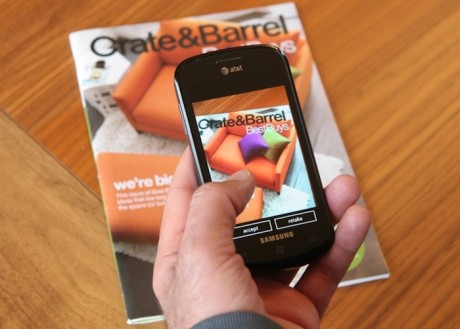
My brother-in-law (aka TheBoss) tipped me off to this wonderful app the other day.  It’s called PaperKarma and here’s how it works: 

  1. Get your mail from the mailbox
  2. Get a bunch of crappy catalogs in the mail – always happens to me for some reason
  3. Load up the PaperKarma app on your phone
  4. Take a picture of the catalog that you don’t want to get any more, marking who it’s addressed to (me or my wife)
  5. Upload it into the app
  6. That’s it

They then will take care of everything that’s needed to cancel the subscription.  The amount of paper that’s wasted on sending catalogs to my house is incredible.  In the past two months, i’ve used PaperKarma to cancel 28 catalog subscriptions.  Some of those were coming every quarter.  It’s ridiculous. 

Anyway, give it a shot.  You won’t be disappointed. 


Two Pieces of Business Advice

An employee recently left Kapost (sad to see you go T) and i was out to lunch with her and she asked some advice. I thought back to two pieces of advice that I was given or things that i have witnessed from successful colleagues.  Here’s what popped up:

“90% of Power is Taken not Given”

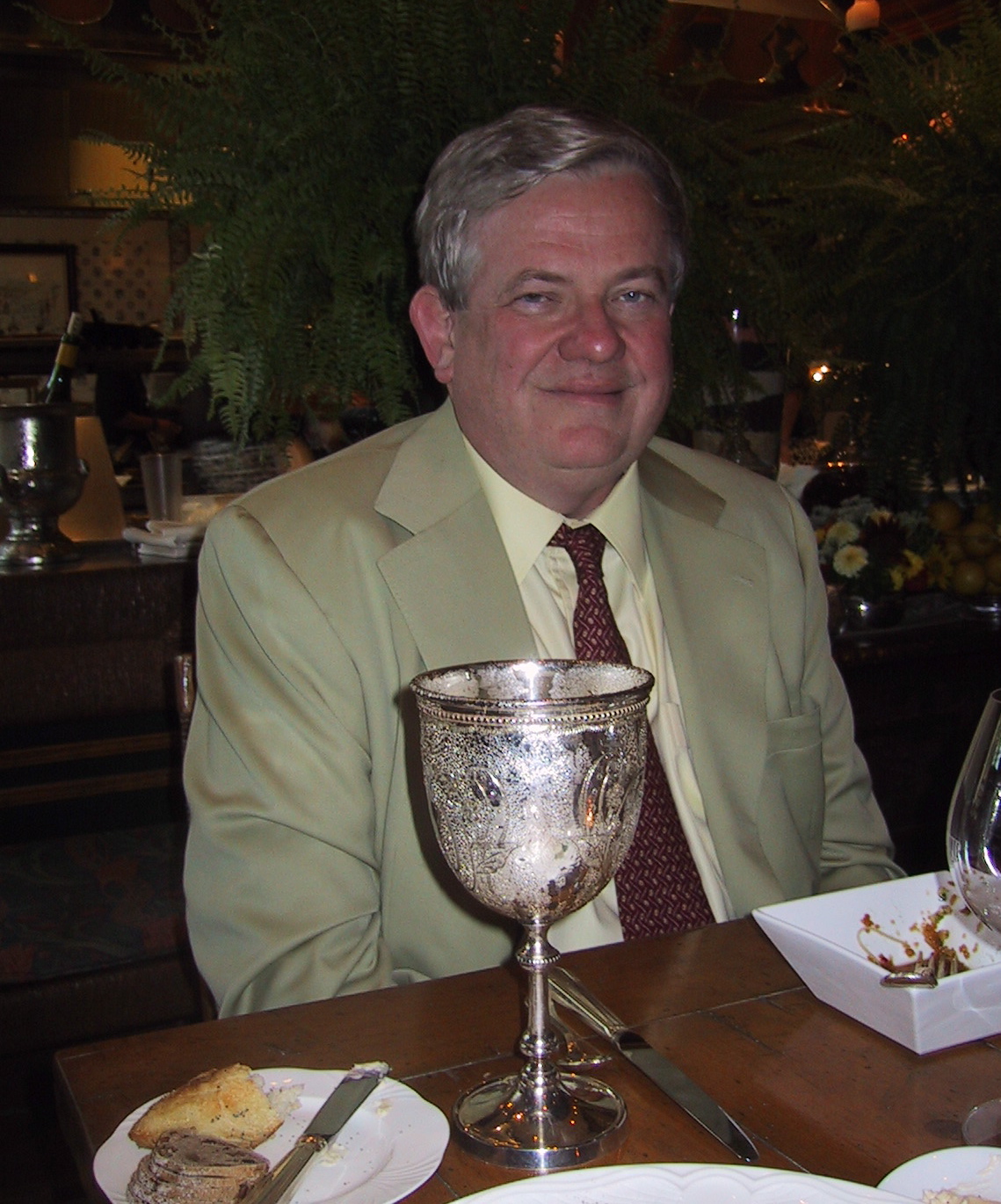
This is a quote from my old boss Bill Raduchel.  Bill loves saying phrases like this to me, and this was one juicy nugget he spat out in 2002 when I was working at AOL.  I took it to heart. I was a product manager at the time and aspired t

Bill at the Inn at Little Washington

o have even more responsibility within the company.  He noticed that and delivered this great quote.  What he meant was that nobody is going to give me extra responsibility.  If i want it, i have to go take it and earn it.

That’s what i did. I wanted to run video services within the company.  There were lots of people running bits and pieces but nobody was owning it.  Instead of waiting for a title and position to be created, i just started acting like i was the defacto video product manager. I had weekly all-hands meetings with the other stakeholders, came up with a product roadmap, and basically acted like the product owner.  What happened? Eventually the company realized i was the product owner and rewarded me with that title.

In small companies there are too many things to do.  In big companies there are lots of ambiguity, swirl and gray space. In both instances, there’s an opportunity to do what you want.  Just be proactive and go do it.  In real estate, ownership is 9/10 the law.  In startups, doing is 9/10 the position.

Don’t Eat Alone

This is just something i’ve realized. Most of the people we hire at Kapost come from referrals.  Most of the opportunities i’ve been given in my career come from contacts of friends of friends.  The size and strength (i.e. authenticity) of your network matters in today’s work world and in your career.  I’ve seen people (Nick O’Neil) go crazy about this where they actually track in a spreadsheet the people they’ve met and want to keep in touch with and make sure every X number of days that they give them an update.  It may sound excessive but it works.  He has a ton of connections who regularly help him out.

There’s even a pretty good book, called “Never Eat Alone” which talks about the power of these connections.

Those are two things that immediately came to mind.  I’d be curious if any of you have heard any other nuggets of great advice that you’d like to share.

Earn Points with Grandma: The Postgram App

I was visiting my grandmother last weekend.  This is the same grandmother that was spotted on the streets of Manhattan at age 90 and asked to be a model for GNC (blog post: My Grandmother is Amazing).  She was remarking about how she loves to see photos of the great-grandkids.  I have one cousin who sends her an email of a picture every day.  I left feeling like i was really laking in my picture sending.  

Then, enter the Postgram App.  With this app, i can grab any picture on my phone or in Instagram and send it as a postcard.  You enter in a message and an address and it gets sent automatically.  Viola. 

Now, my grandma is getting mail all the time of pictures.  Yes!


Twitter Stock and Slowing Growth

In mid-December I bought Twitter stock for ~$45 a share.  Here’s why: 

  1. I’m bulling on Twitter as a social network. I think it has lots of great use cases that almost anyone could benefit from.  It will only grow in popularity once people start realizing what it is. 
  2. I think Dick Costolo is a great CEO and product person. I’ve watched numerous interview with him (including this great PandoMonthly one), have followed his path since Feedburner, and I believe he has the company running on the right track and is doing a great job.
  3. Twitter is just now starting to monetize but I think they’ll be able to pull in a good amount of money.
  4. When I bought their market cap was 20 billion.  At 10x multiples, that means they have to have yearly revenues of $2 billion.  That seems feasible for me that they’ll get there.

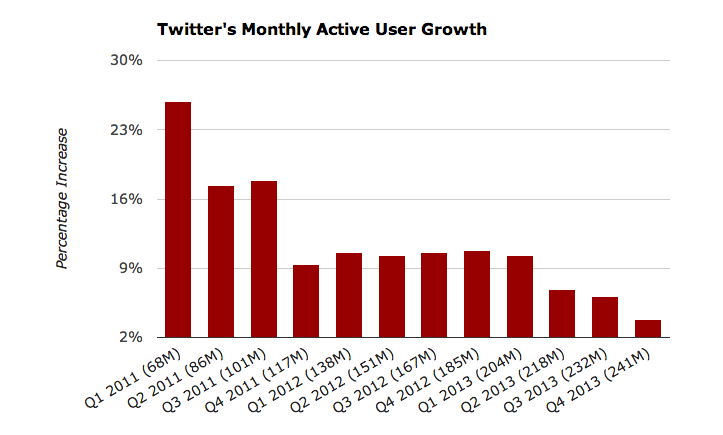
I was happy with my purchase. Then, on Wednesday night Twitter announced their first ever earnings since going public.  What a disaster it was.  First off, everyone compares them to Facebook even though they are completely different.  Second, they have seemed to have stopped growing.  Look at this chart:

That’s not good.  They need to grow.  They only added 1 million US users in Q4.  Wow, that is a crazy low number. 

So, while I am still a believer, I think it might be a tough year or two (or three) until they hit mainstream.  Trust me, it’ll be a better world when they do.  

Why I’m Excited About the Super Bowl

Here’s something I think is cool.

Broncos-Seahawks-Superbowl

The Denver Broncos shattered records this year as the most dominant offensive team in NFL history. They scored 38 points per game this year, an NFL record.  Their QB, Peyton Manning,  also set records for most passing yards and touchdowns by a QB in a season.  They play Seattle whose defense was the best in the league and is the fifth-best overall statistical performance of any team since 1989.

So, it will be an epic showdown of a historical great offense against a historically great defense.

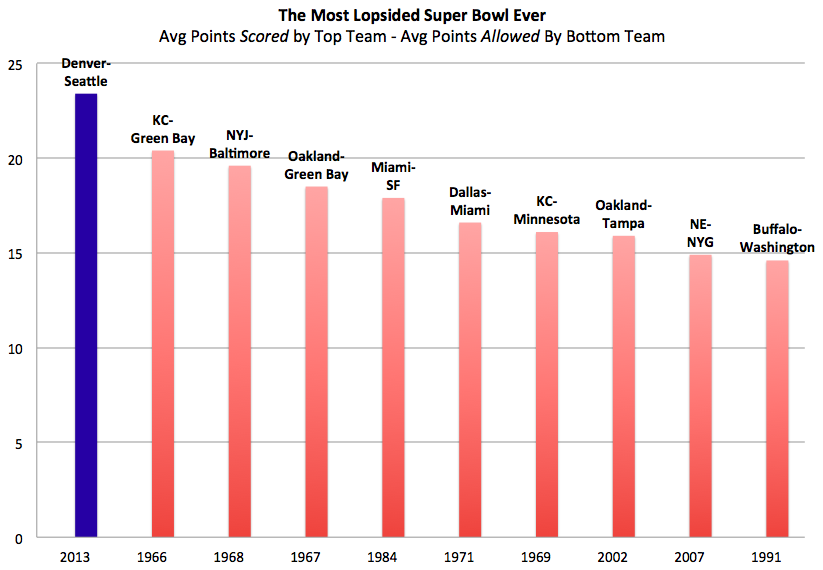
If that hasn’t blown you mind enough, check this out…. the difference between the Broncos’ average-points-scored and the Seahawks average-points-allowed this season is the widest in the history of the Super Bown. It is what one website found to be “the greatest offense/defense showdown in Super Bowl history.”

So there’s that.  Let’s go Broncos!


← Newer posts

Older posts →