I just got a Kindle for my birthday about a week ago and have really loved reading on it. I think digital books could change how i read and the amount i read in a great way.
I was bummed however, to read of the new Barnes & Noble Nook not because it’s bad but because of what it represents.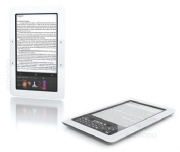
The hardware of the Nook is better: It has expandable storage slot, it has wifi and it has a touch screen instead of a keyboard which means it’s more flexible for future functionality.
I now have library concerns. The Nook can take not only B&N’s eBooks but also Google’s and PDF’s. While i’m not one to compare book counts, i am worried about my eBook library. When i buy a book i want to own it forever. I don’t want it attached to the device i have at that time. Think of how bad it would be if the music you had was tied to your iPod. Every time you got a new iPod, you could only put new music on it. Granted, it’s not a great analogy because you listen to music over and over and you typically read a book only once. But i think you see my point.
Vinyl vs. Books. What i think could happen with me is that my book purchasing starts to look like how many music lovers purchase vinyl. These people consume music digitally, through mp3’s, but for bands they really love they like to have the physical product – thus they purchase the vinyl record. I could see myself doing this with books. I read them all digitally and for authors/books that i really like, i’ll actually pay a premium and buy the physical copy. Ideally i would like to have a format (like mp3) where i could save every book in and keep them all on a harddrive.
The Nook has sharing capabilities. With the Nook you can send a book to a friend for 14 days. This is nice but not a big deal for me. What i want is the ability to share sections of the book to the web. I want to post passages to my blog and i want to send to Facebook and twitter sentences that i enjoy. I don’t see anyone allowing this and it’s troubling. I want to be able to do much more with digital books then i could with the actual book. That’s why the mp3 is so much more powerful than the CD and that’s why the eBook could be much better than the book
Anyone else had similar concerns with their kindle?
![Reblog this post [with Zemanta]](http://img.zemanta.com/reblog_c.png?x-id=6973e913-44d3-4689-81a0-84479a1e9675)
 o way of not only knowing what hair color or muscle mass they kid would have and some patents didn’t even know if they were having a boy or a girl
![Reblog this post [with Zemanta]](http://img.zemanta.com/reblog_c.png?x-id=a88c3e9a-2d8b-4ed7-8cdc-cd6674b50a8f)

![Reblog this post [with Zemanta]](http://img.zemanta.com/reblog_c.png?x-id=9f515cdc-7839-4f30-b0ab-fe6b760ca2e2)
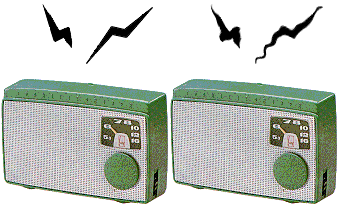 In the book there’s a good passage about the music business and radio. In the late 1930’s, radio was emerging as a popular entertainment format but also one that made a mess of the old ways of paying musicians. At the time most radio broadcasts were live, and the musicians and composers were paid for a single performance but to musicians and composers payment for a single radio performance alone did not seem fair when that one performance was being received by millions of listeners. To them, if those millions were packed into one concert hall, the musicians share of the receipts would have been huge.
 need the deck by tonight.” or “Can you meet me on Sunday to talk about the deal?” Sometimes i like doing it and sometimes i don’t. Here’s what i do know though: I always like doing what i believe in and i always hate doing what i don’t think is right.
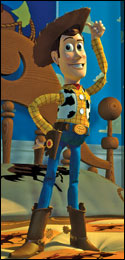 John Lasseter lost his job at Disney back in ‘86. He was fired by an old line animator who said there was no future in computer animation. Lasseter slept under his desk, and a decade later delivered Pixar’s first hit, “Toy Story”. After story he and Pixar have gone for 10 for 10. Nothing is a sure thing in media. And John is 10 for 10.
![Reblog this post [with Zemanta]](http://img.zemanta.com/reblog_c.png?x-id=02417067-2765-4878-a566-c1887329314e)

![Reblog this post [with Zemanta]](http://img.zemanta.com/reblog_c.png?x-id=fe73f350-87ab-4064-9cc7-b3c54a9b2aff)
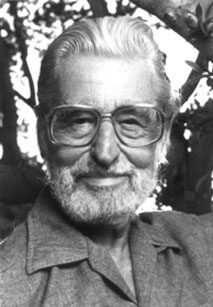 While at Dartmouth, Theodor was editor of Dartmouth’s comedy magazine called The Jacko. That is until he got caught drinking on Easter eve and got kicked out. By his fraternity (Caste and Gauntlet) he was voted least likely to succeed and he graduated with a 2.4 in 1925. Given all that he managed to go out and sell more than 222 million books (66 titles). That’s pretty amazing